Devs for Devs: Short Eye Long Eye

Hello! 👋 Another Sunday, another “Devs for Devs” issue! Meet Faiq Khan , an experienced iOS engineer with a strong background in building and shipping mobile products. Today, he answers a simple question many indie devs face: what should an indie dev keep in mind while developing? With his years of hands-on development experience and practical knowledge from working across different projects and teams, he shares his tips on how to keep moving forward. P.S. You can check out and follow Faiq’s work on LinkedIn and website.
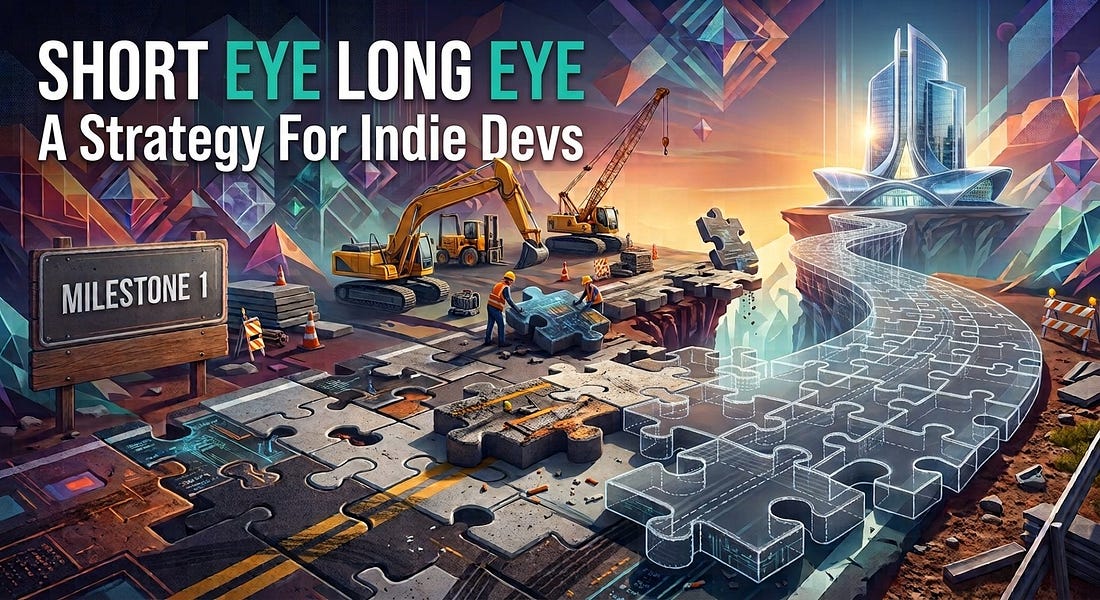
A Strategy for Indie DevelopersAs indie developers, we lack the safeguarding structure that full-sized product teams enjoy. We don’t have a dedicated PM, a scrum master, or the formal structure of a sprint or squad environment, systems designed to handle heavy planning, detailed estimation, and peer discussion. You are often completely on your own making those decisions. While traditional agile processes can work, as indie devs we need to relentlessly streamline how much energy we assign to planning overhead in order to deliver features in a reasonable time. It’s easy to get caught up thinking about the distant product we want to build: The big vision. The polished UI. The features we haven’t even started yet. The version that exists somewhere months down the road. Having that long-term vision is important. It gives you direction and something to work towards. But there’s a danger in staring at the destination for too long: you can lose sight of what actually needs to happen today. I’ve found it much more useful to think in two layers: Long Eye: Where am I ultimately trying to take this product? Short Eye: What specifically needs to happen today to move me one step closer? And that short-term vision should get really short. Not “build the new creation system this week.” Instead: “Today, get the item selection working.” Tomorrow might be: “Connect the selected item to the inventory system.” Small, achievable steps. There’s another benefit to working this way: small steps make it harder to fall down rabbit holes. We’ve all been there. You start working on one feature, notice something that could be improved, start refactoring it, discover another problem, research a new approach… and suddenly three hours have disappeared and you’re nowhere near what you originally set out to do. Daily GoalsA clearly defined daily goal gives you something to anchor yourself to. You can still explore. You can still experiment. But you always have a destination for the day. For me, a good daily goal should be (MASS): Meaningful: it should move the product forward, even if only slightly. Simple: clear enough that I don’t spend half the day deciding what to do. Small: scoped to fit within the day. And there’s one task I always want to finish the day with: Review tomorrow’s agenda. Before closing the laptop, decide what tomorrow’s small win looks like. That way, when you sit down the next morning, you’re not asking: “Where do I start?” You already know. The Long Eye tells you where you’re going. The Short Eye tells you what to do next. Keep the steps small, stay out of the rabbit holes, and keep moving forward. Think big. Plan small. Ship every day.
|