Fatbobman's Swift Weekly #130
Fatbobman's Swift Weekly #130Apple's Rare Concession: When Critical Vulnerabilities Meet the "Update Refusal" Wave
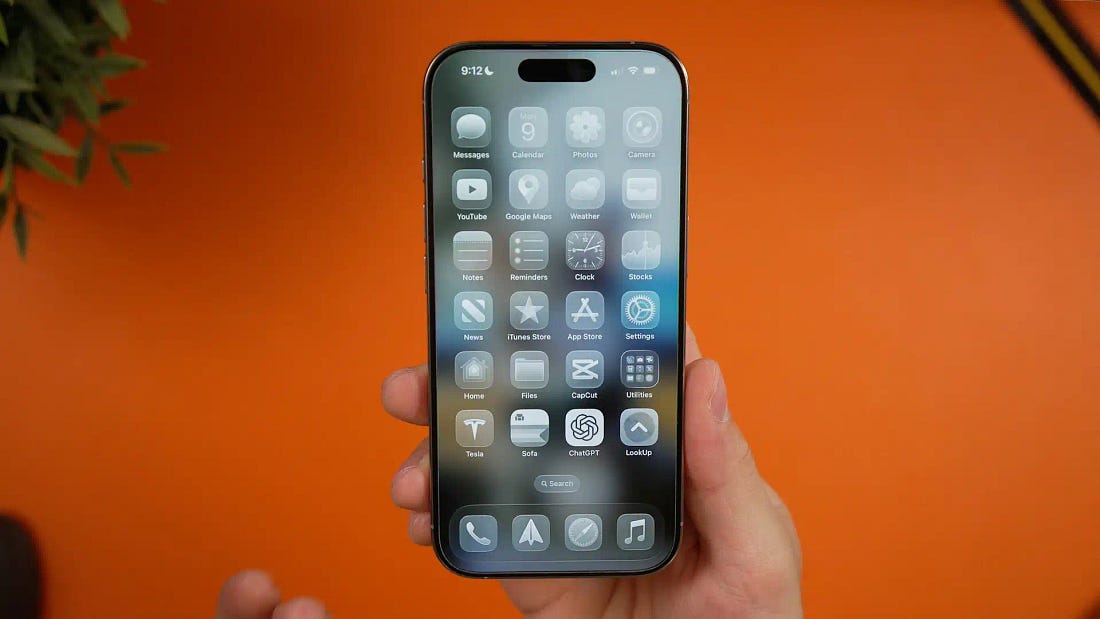
Apple’s Rare Concession: When Critical Vulnerabilities Meet the “Update Refusal” WaveMost iOS users have recently encountered news about two serious security threats: Coruna and DarkSword. Both exploit chains rely on watering hole attacks — no user interaction required. Simply visiting a legitimate website embedded with a malicious iframe, or loading a compromised advertisement in Safari, is enough to trigger the full attack chain. Once data is exfiltrated, the malware cleans up its own traces automatically. Because the vulnerabilities exploited span the vast majority of iOS versions from iOS 13 through iOS 18.7, hundreds of millions of devices have been affected to date. Coruna primarily targets devices running iOS 13 through iOS 17. Apple has pushed multiple security updates to these systems over the past several months. DarkSword, meanwhile, targets iOS 18.4 through 18.7 — devices that are all perfectly capable of running iOS 26, yet for various reasons, a significant number of iOS 18 users have chosen to stay put. For a long time, iOS users were notably eager to update — one of the defining characteristics of the Apple ecosystem. That changed last year. The sweeping visual overhaul introduced by Liquid Glass prompted an unprecedented wave of deliberate refusals to upgrade to iOS 26, something Apple had never seen at this scale before. Compounding the problem, Apple introduced a mandatory age verification system in iOS 26.4 for UK users, in compliance with the Online Safety Act. The verification requirements proved strict enough that many adults found themselves forcibly locked into a “child mode,” fueling a separate wave of UK users choosing to remain on iOS 18 or iOS 26.3. In both cases, the decision to avoid updating meant forgoing all subsequent security patches — leaving devices increasingly exposed. Faced with this situation, Apple came under significant public pressure and reputational risk. The turning point came in late March, when DarkSword’s complete exploit code was leaked to GitHub, effectively democratizing what had been a nation-state-level hacking tool and forcing Apple’s hand. Apple ultimately took the rare step of releasing a dedicated security patch for iOS 18 — iOS 18.7.7 — backporting the same protections already present in iOS 26 to the older system. With that, Apple completed its official security response to this wave of critical vulnerabilities. Both Apple and developers across the ecosystem generally want users to stay current with system updates — it reduces the burden of maintaining compatibility across multiple versions and lets users benefit from new APIs sooner. The reality, though, is that a portion of users will always choose to lock their devices to a particular version, whether for performance, battery life, habit, or privacy reasons. This episode may leave two lasting marks. On one side, Apple — under pressure — broke from a long-held update policy and made a concession to users who had deliberately chosen to stay on older software. On the other, the widespread attention the attacks received may nudge more users to reconsider the “update only when necessary” mindset and return to a more proactive stance toward system updates. That shift in both directions might just be the unexpected upside of an otherwise alarming security event. Previous Issue|Newsletter Archive 📢 Sponsor Fatbobman’s Swift WeeklyPromote your product to Swift & iOS developers across: - Blog: 50,000+ monthly visitors Perfect for developer tools, courses, and services. Enjoyed this issue? Buy me a coffee ☕️ Recent RecommendationsAnimatable in SwiftUI Explained - Complete Guide with Examples & Deep DiveThere is no shortage of articles exploring SwiftUI’s animation system, yet this piece by Sagar Unagar offers a particularly insightful perspective. Rather than starting from implicit or explicit animations, it builds a systematic understanding around the The most valuable takeaway is its core viewpoint: SwiftUI is not animating views directly—it is animating data. Localization in Swift PackagesXcode can automatically generate type-safe Swift symbols for Khan Winter proposes a straightforward solution: use a bash script to parse the JSON structure of One particularly noteworthy detail is the use of SwiftUI Coordinator Pattern: Navigation Without NavigationLinkAlthough SwiftUI continues to evolve its state-driven navigation APIs, managing global navigation remains a persistent challenge. Wesley Matlock demonstrates a Coordinator-based approach using a five-tab music collection app as an example. The idea is to extract navigation decisions from views: define all destinations in a The article does not shy away from real-world tradeoffs, such as the opacity of Teach your AI to write Swift the Hacking with Swift wayPaul Hudson and his Hacking with Swift have helped many developers get started with Swift and SwiftUI. In the age of AI, Paul is not only releasing specialized skills for Apple platform development, but also experimenting with injecting his personal coding style into AI collaboration. In this article, he shares a highly distinctive (and characteristically humorous) Rather than a simple system prompt, this feels more like defining a coding philosophy for AI. In a sense, it pushes code generation beyond mechanical output toward something closer to style transfer. The Principles and Practices of AI AgentsAt the recent Let’s Vision 2026, Wang Wei (Onevcat) delivered a talk on applying AI agents within large development teams. The focus was not on specific tools, but on how development workflows should evolve when the cost of code generation drops dramatically—and how the role of engineers should be redefined. As a member of the LINE development team, Onevcat’s own work has already shifted in recent months. In his words, he is transitioning from a traditional iOS engineer to someone exploring how AI can support large-scale product development. This perspective gives the talk a depth that goes beyond typical tool introductions. The talk revolves around three key questions: how to control context pollution, how to turn individual experience into reusable team-level memory and skills, and how to evolve collaboration from “humans directing multiple agents” toward more automated workflows. It includes many practical suggestions, such as keeping AGENTS.md concise, providing architectural lookup scripts, encouraging multiple harnesses (Claude Code, Codex, OpenCode) to coexist, and integrating agents into workflows via webhooks, cron jobs, pipelines, and automated validation.
From Zero: The Complete Guide to Building a Native iOS App with AII often see “non-developers” on social media building products entirely with AI. Even after using AI tools for quite some time, I still find myself wondering: is this path really as effective as it seems? Zachary Zhang shares a full end-to-end journey of building and shipping a native iOS app (SwiftUI + Cloudflare backend) entirely with AI. What stands out most is his disciplined engineering pipeline: before generating any code, he first produces a structured PRD and HTML-based visual references. For tooling, he strongly recommends terminal-based tools like Claude Code during the “0 to 1” phase, as they provide better visibility and control when constructing a multi-file project architecture.
ToolsSlots: A Macro for Improving Custom SwiftUI Component DesignComposing multiple views into reusable components is a common need in SwiftUI—especially for teams and library authors. However, once a component introduces multiple generic slots (title, icon, image, action, etc.), initializer combinations can quickly explode. The Slots macro by Kyle Bashour addresses this problem by generating initializer combinations automatically based on declared slot properties, eliminating the need to manually write numerous Slots is particularly well-suited for building design system components such as Card, Row, Banner, and Toolbar—where both ease of use and flexibility are required. Explore SwiftUI: A Visual Reference for Native Components and ModifiersAlthough Apple’s documentation has improved over the years, SwiftUI—being declarative and visually driven—still lacks intuitive side-by-side mappings between code and UI results, especially across platforms like iOS, macOS, and visionOS. As a result, developers often resort to complex third-party libraries or verbose custom views for UI details that SwiftUI might already support natively. Florian created Explore SwiftUI as a “visual dictionary” to address this gap. It focuses entirely on native components, with no third-party abstractions. Code examples are stripped of unrelated logic and paired with high-quality previews—allowing developers to simply copy, paste, and run. BookSwiftUI Architecture: Patterns and Practices for Building Scalable ApplicationsThis is a recently published book by Mohammad Azam. It is not an introductory guide to The book addresses real production challenges, such as building global Sheets and Toasts, designing decoupled multi-tab routing with Some might wonder whether architecture-focused books still matter in the age of AI-assisted coding. As Azam puts it: AI makes code generation cheap—but precisely because of that, system design (clear boundaries and ownership of state) becomes more important than ever. Thanks for reading Fatbobman’s Swift Weekly! This post is public so feel free to share it. 苹果的罕见妥协:当高危漏洞遇上“拒升”潮对于 iOS 用户来说,最近或多或少都会看到与 Coruna、DarkSword 有关的高危漏洞消息。两个攻击链均采用水坑攻击的方式,攻击者无需受害者进行任何交互,仅需访问一个被植入恶意 iframe 的合法网站或加载恶意广告,即可触发完整的攻击链,在窃取资料后自动清理攻击痕迹。由于工具链利用的漏洞存在于 iOS 13 至 18.7 的绝大多数版本中,截止目前,已有上亿用户受到影响。 Coruna 主要针对 iOS 13 至 iOS 17 的设备,在过去几个月间,苹果已为这些系统推送了多次安全更新。DarkSword 则主要针对 iOS 18.4 至 18.7 的设备。尽管这部分设备均具备升级至 iOS 26 的硬件条件,但由于种种原因,仍有不少 iOS 18 用户选择按兵不动。 在很长一段时间里,苹果用户对于系统更新的态度都相当积极,这也是苹果生态的一大特色。但这一趋势在去年出现了变化——Liquid Glass 带来的巨大视觉冲击,让苹果用户中第一次出现了相当比例主动拒绝升级到 iOS 26 的现象。与此同时,为遵守英国《网络安全法》(Online Safety Act)的要求,苹果在 iOS 26.4 中为英国用户引入了强制年龄验证机制,由于验证条件严苛,不少成年用户甚至被系统强行锁入‘儿童模式’,进一步推动了英国用户停留在 iOS 18 或 iOS 26.3 的风潮。而拒绝安装新版本,意味着这部分用户同时放弃了后续所有安全补丁,让设备进一步暴露在潜在风险之下。 面对这一局面,苹果承受了明显的舆论压力与品牌风险。特别是在 3 月下旬,DarkSword 的完整攻击代码被泄露到了 GitHub 上,让这一国家级黑客工具瞬间平民化,直接迫使苹果必须采取紧急行动。最终,苹果罕见地为 iOS 18 单独推出了安全补丁 iOS 18.7.7,将原本仅用于 iOS 26 的防护机制回移植到旧系统。至此,苹果完成了针对本次高危漏洞的全部官方安全响应。 无论是苹果还是生态中的开发者,大多希望用户能积极跟进系统更新——既能减少多版本适配的维护负担,也能让用户尽快享受到新 API 带来的便利。但现实是,始终有一部分用户出于性能、续航、使用习惯乃至隐私等方面的考量,有意将设备锁定在某个版本。 本次事件或许会带来两个方向上的变化:苹果在压力下调整了长期坚守的更新策略,为刻意留守旧系统的用户做出了妥协;而事件本身的广泛传播,也可能促使更多用户从安全角度重新审视“能不更新就不更新”的惯性,回到积极更新的轨道。这种双向的改变,或许正是这场风波意料之外的收获。 如果您发现这份周报或我的博客对您有所帮助,可以考虑通过 爱发电,Buy Me a Coffee 支持我的创作。 近期推荐通过 Animatable 深入 SwiftUI 动画 (Animatable in SwiftUI Explained - Complete Guide with Examples & Deep Dive)网络上并不缺少探讨 SwiftUI 动画机制的文章,但 Sagar Unagar的这篇仍然提供了一个颇具启发性的切入点。他没有从隐式或显式动画入手,而是围绕 Animatable 协议做了一次系统梳理:从 animatableData 的作用,到 AnimatablePair 如何承载多个插值参数,再到通过自定义 VectorArithmetic 让更复杂的数据结构参与动画。文章最值得注意的一点在于其核心视角:SwiftUI 实际上是在“动画数据”,而非直接对视图进行动画处理。 在 Swift Package 中共享本地化资源 (Localization in Swift Packages)Xcode 能为 其中一个颇具参考价值的细节是 Debug 模式下的 Coordinator 全局导航模式 (SwiftUI Coordinator Pattern: Navigation Without NavigationLink)尽管 SwiftUI 一直在丰富基于状态驱动的导航 API,但管理全局导航一直是 SwiftUI 中的一个“痛点”。Wesley Matlock 以一个五 Tab 的音乐收藏应用为例,展示了如何通过 Coordinator 模式将导航决策从 View 中抽离:用一个 Route 枚举统一描述所有目的地,由单一的 Coordinator 对象持有导航状态并执行跳转,View 只需声明“去哪”而无需关心“怎么去”。文章没有回避 NavigationPath 不透明、路由携带模型对象导致的 Hashable 困境等实际问题。对于大多数中等规模的 SwiftUI 应用来说,这是一个务实且易于落地的导航治理方案。 把 Hacking with Swift 的编程风格写进 AI (Teach your AI to write Swift the Hacking with Swift way)Paul Hudson 和他的 Hacking with Swift 让很多开发者走上了 Swift 与 SwiftUI 的学习之路。在 AI 时代,Paul 不仅推出了面向苹果开发生态的各类专业 Skill,也开始尝试在与 AI 的协作中注入更具个人特质的编程风格。 在本文中,他分享了一份极具辨识度(且充满他标志性幽默)的 AI Agent 的道与术在刚过去的 Let’s Vision 2026 中,王巍(Onevcat) 发表了关于在大型开发团队中应用 AI Agent 的演讲。整场分享讨论的重点,并不是某个具体工具有多强,而是当代码实现成本被迅速压低后,团队该如何重新组织开发流程,以及工程师的价值该如何重新定位。 作为 LINE 应用开发团队的一员,Onevcat 在过去几个月中的工作重心也已明显发生变化。用他自己的话说,他正在逐步从传统意义上的 iOS 工程师,转向探索如何将 AI 应用于服务大型产品研发团队的实践者。这种角色上的变化,也让这场分享比一般的工具介绍更有说服力。 演讲围绕三个关键问题展开:如何控制上下文污染,如何把个人经验沉淀为团队可复用的 memory 与 skill,以及如何让协作模式从“人指挥多个 Agent”逐步走向更自动化的闭环。里面有不少相当接地气的实践建议,例如将 AGENTS.md 控制在精简范围内、为 Agent 提供模块定位与架构速查脚本、鼓励 Claude Code、Codex、OpenCode 等多种 harness 并存,以及通过 webhook、cron、pipeline 和自动验收机制让 Agent 真正进入团队流程。
从零开始:用 AI 开发一个 iOS 原生 APP 完整指南我经常会在社交媒体上看到一些零基础的“开发者”通过 AI 构建了自己的产品或服务。尽管我使用 AI 的时间也不短,但我仍然比较困惑:这条路径真的像大家描述的那样有效吗?Zachary Zhang 分享了他完全借助 AI 工具,从零构建并上架一款纯原生 iOS 应用(SwiftUI + Cloudflare 后端)的实战全过程。这篇文章最让我印象深刻的,是他严谨的“工程化管线”:在让 AI 写代码前,必须先生成结构化的 PRD 和 HTML 格式的视觉参考;而在工具选择上,他在项目“从 0 到 1”的冷启动阶段,极力推荐 Claude Code 等终端工具,以便更好地统览全局,一次性构建出合理的多文件项目架构。
工具Slots:提高自定义 SwiftUI 组件设计效率的宏将多个视图组合封装成可复用组件,是 SwiftUI 开发中的常见需求,对团队内部开发者或第三方库作者来说更是如此。但当组件包 title、icon、image、action 等多个泛型 View 插槽后,初始化器的组合数量往往会迅速膨胀。Kyle Bashour 创建的 Slots 宏,正是为了解决这类多 slot 组件的样板代码问题。 开发者只需声明组件的 slot 属性,宏便会按组合自动生成所需的初始化器,无需手写大量 init 重载。对于需要支持文本便捷写法的 slot,还可以通过 Explore SwiftUI:纯原生组件与修饰符的视觉速查图库尽管 Apple 官方文档的质量在逐年改善,但对于以声明式和视觉驱动为主的 SwiftUI 来说,官方文档中依然缺乏足够直观的代码与 UI 效果对照,尤其是同一组件在 iOS、macOS 和 visionOS 等多平台上的表现差异。很多时候,开发者为了实现某个特定的 UI 细节,往往会去求助于复杂的第三方库或手写冗长的自定义视图,却忽略了 SwiftUI 本身可能已经提供了绝佳的原生解决方案。Florian 建立的 Explore SwiftUI 站点,正是一个为了解决这一痛点而生的“视觉速查字典”。它摒弃了任何第三方封装,纯粹以展示 Apple 官方内置组件的原生能力为核心。所有的代码示例都被剥离了无关的业务逻辑,保持极简,配以高质量的视觉预览,开发者只需“复制、粘贴、运行”即可直接验证效果。 书籍SwiftUI Architecture: Patterns and Practices for Building Scalable Applications这是一本 Mohammad Azam 在不久前出版的新书。它不是一本教你如何使用 书中提供了大量直击生产环境痛点的解决方案,例如:如何构建全局的 Sheets 和 Toasts、如何利用 或许有人觉得,在 AI 辅助编程盛行的时代,这类探讨架构的书籍还重要吗?借用 Mohammad Azam 在书中的观点:AI 让代码生成变得廉价,但也正因如此,系统架构的设计(边界的划分和状态所有权的明确)变得比以往任何时候都更加重要。 Welcome to my blog Fatbobman's Swift Blog( 肘子的Swift记事本 )
|