Those Who Swift - Issue 259
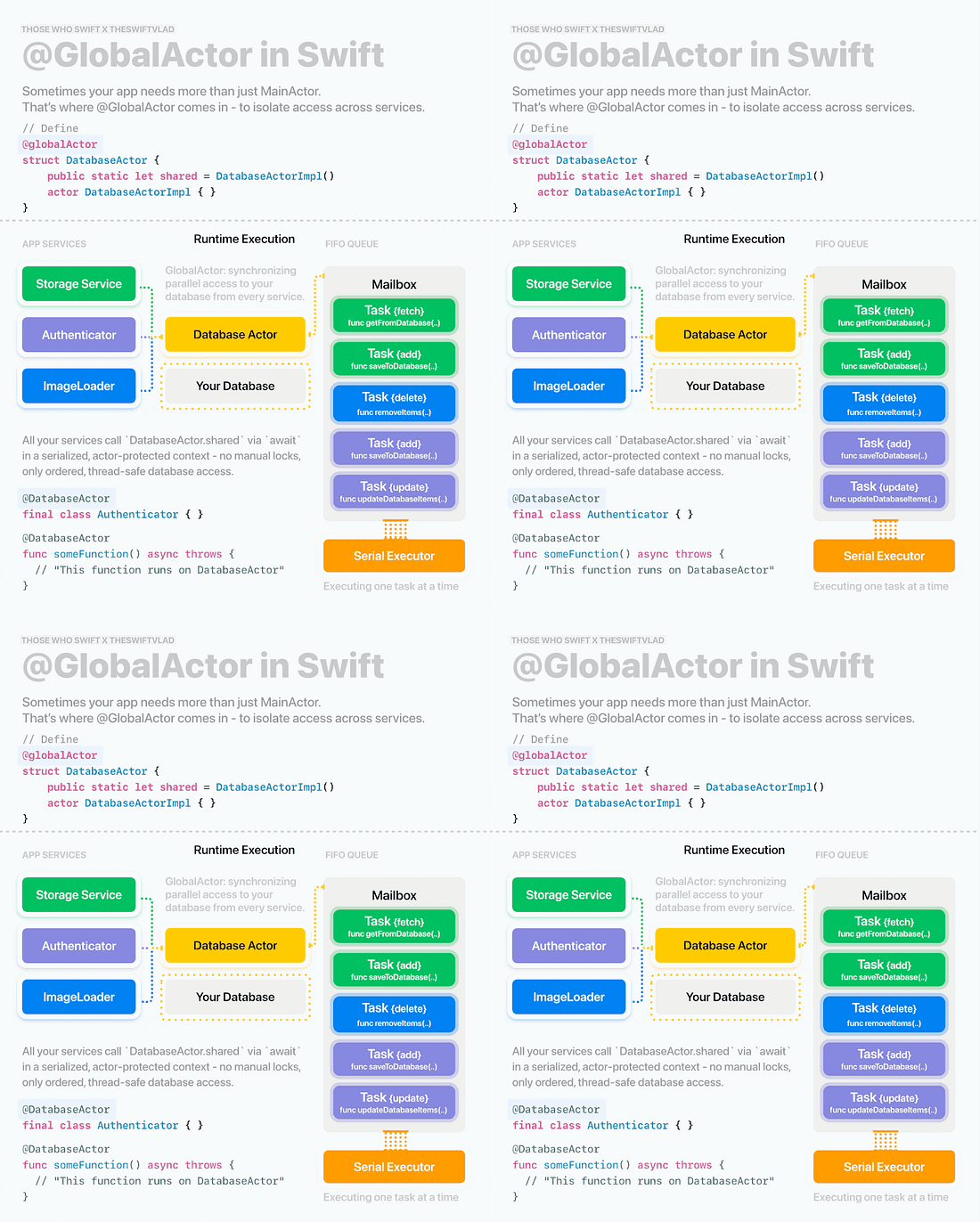
Weekly note ✏️AI apps are getting more autonomous, and Anthropic’s Claude is a great example of that shift. It’s steadily gaining remote and coordinated capabilities, including features like Remote Control and scheduled Cowork sessions. These tools allow you to manage development workflows from your phone, bringing a level of flexibility similar to what OpenClaw introduced earlier, but now with a more integrated approach. At the same time, its main competitor is moving in a different direction. OpenAI is reportedly shutting down some side products, including the Sora app, to focus on future AGI development and training new models. That shift is not surprising. Model training requires enormous resources, and from a business perspective, maintaining standalone apps that don’t cover their operational costs becomes difficult, especially with an IPO on the horizon. Add ongoing concerns around legal content and deepfakes, and the decision becomes even more understandable. What we’re seeing is a divergence in strategy. Some companies are expanding real-world usability and control, while others are consolidating efforts around core model development. For developers, this means tools are becoming more like orchestration layers-multiple systems, multiple “strings to pull,” all needing synchronized control. In a way, it starts to resemble a GlobalActor pattern, but at a system level. This week we’re sharing a practical tip related to this idea. 👇
Connect with the "Those Who Swift" team - Justas Markus & Anton Gubarenko 👋 Swift Around the Web 🌐Swift Algorithms - Apple’s Hidden Collection And Sequence APIs You Should Be UsingSagar Unagar highlights how Apple’s swift-algorithms package can replace a lot of handwritten loops and index-heavy code with clearer, safer collection operations. The most useful part is the practical tour through APIs like combinations, chunking, product, uniqued, and random sampling, with real examples that make the package feel immediately usable. Talking Liquid Glass With AppleDanny Bolella shares notes from Apple’s explanation of Liquid Glass and the tradeoffs behind the design, especially around layering, legibility, and when the effect should step back instead of drawing attention. The most useful part is the product angle: Liquid Glass is not just decoration, it is meant to react to context and hierarchy, which makes adoption more about restraint than adding blur everywhere. Swift 6.3 ReleasedHolly Borla and Joe Heck highlight Swift 6.3 as a broad release with more flexible C interoperability, cross-platform build improvements, embedded Swift updates, and the first official Swift SDK for Android. The most useful developer-facing additions include the new @c attribute, a preview of Swift Build integration in SwiftPM, and Swift Testing improvements like warning issues, cancellation, and image attachments. Coding 👨💻iOS App Launch Process: From Tap To First FrameArtem Mirzabekian breaks app startup into the parts that actually matter for performance: process creation, dyld, pre-main work, SwiftUI Architecture Lessons I Wish I Knew EarlierMuhammad Azam says most SwiftUI architecture problems come from blurry boundaries, not from SwiftUI itself, and recommends separating container screens from presenter views. His most useful advice is to keep UI state inside views, introduce stores only when needed, and use enums instead of piles of booleans for sheets and flows. Apple 🍏WWDC26: June 8-12, 2026Apple has announced that WWDC26 will run from June 8 to June 12, 2026, with the full week available online and free for the global developer community. The key reminder is simple: expect new Apple tools, frameworks, and features, plus video sessions, labs, and direct access to Apple engineers and designers. Design 🎨SwiftUI iPad Adaptive Layout: Five Layers For Apps That Don’t Break In Split ViewWesley Matlock argues that Other cool stuff 🧰SwiftUI Live Broadcasting With AWS IVSItsuki shows how to add live broadcasting to a SwiftUI app with AWS IVS by wrapping the streaming client in an observable manager and bridging camera preview into SwiftUI. The most useful part is the end-to-end flow: permissions, device discovery, session strategy, and UI state all come together in a setup you can adapt for a real creator app. I Refactored 3 Apps In A Year. Here’s What I Actually LearnedJakub Milcarz says the hardest part of returning to an old codebase is not bad code, but lost context and unclear connections. His takeaway after refactoring Coffee Note, Bookie, and Memorize is that clean architecture is less about one perfect pattern and more about making the code feel easy to re-enter and change. AI 🤖Generally Useful PromptsDavid Smith shares a practical set of AI prompts he now uses in real app work, from generating SwiftUI previews to creating testing checklists, release notes, and spot-checking new bugs from a git diff. One especially useful pattern is anchoring prompts to the diff since the last release, which keeps the model focused on what actually changed. Review Your Own AI-Generated CodeScott Berrevoets argues that as agents write more production-quality code, the real review bottleneck shifts from implementation to planning, guidance, and specs. His sharpest point is that human review still matters, but it may be more valuable at the plan level while the engineer driving the agent self-reviews the generated code. Tutorials 📒Apple Foundation Models In Practice: Building On-Device AI Features In SwiftWesley Matlock shows what building real on-device AI features with Apple’s Foundation Models looks like in practice, from availability checks to typed generation with Video 🎥The Layout Protocol (Part 1)Chris Eidhof and Florian Kugler revisit an old SwiftUI layout challenge and solve it with the Layout protocol instead of older GeometryReader and preference hacks. The most useful part is the step-by-step custom layout build, including sizeThatFits, placeSubviews, and frame calculations that keep two labels aligned to a bar as space changes. Swift Concurrency Explained With Matt MassicotteWalid Sassi invited Matt Massicotte to walk through the core ideas behind Swift Concurrency, including actors, isolation, Sendable, and structured concurrency. Yet, another thing…⏩Web RewindOpera’s Web Rewind turns 30 years of internet history into an interactive timeline filled with old web moments, sounds, and artifacts that feel closer to a digital museum than a normal promo site. The most interesting part is the format itself: instead of just listing milestones, it lets you move through eras of the web and revisit how online culture evolved from dial-up days to the AI era. Thanks for reading Those Who Swift! Subscribe for free to receive new posts.
|